
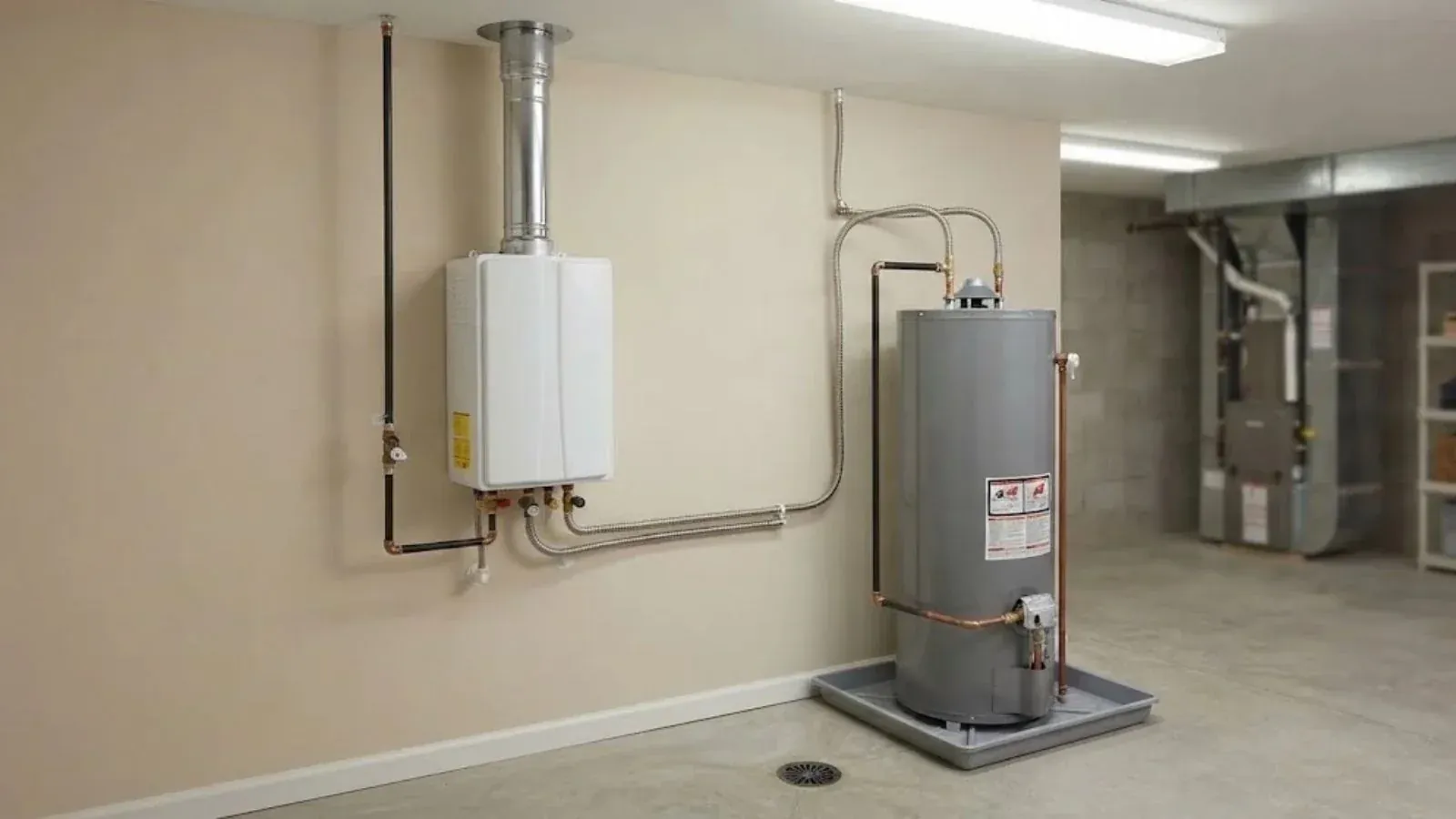
Why venting matters
.A gas tankless heater burns fuel and produces exhaust that must leave the house. Exhaust that leaks back inside carries carbon monoxide.
Vent rules come from two sources, the unit's installation manual and the code the town enforces. The two must agree, and the manual is not optional.
Condensing and non-condensing units
.High-efficiency condensing units extract so much heat that the exhaust is cool and acidic. They can use plastic vent pipe and need a drain for the acidic condensate. Non-condensing units run hotter and need metal vent pipe.
| Type. | Exhaust. | Vent material. | Condensate drain. |
|---|---|---|---|
| Condensing. | Cool, acidic. | PVC, CPVC or polypropylene as the maker allows. | Required. |
| Non-condensing. | Hot. | Stainless steel or other approved metal. | Usually not required. |
Using the wrong material can corrode or melt the vent. Follow the manual exactly.
Direct vent and sealed combustion
.A direct vent unit pulls air for combustion from outside through one pipe and sends exhaust out through another, or through a coaxial pipe with one inside the other. It does not use air from the room.
That is safer and cleaner in a tight modern house, and it lets the heater sit in a closet. Both pipes must terminate where the manual and code allow, away from windows, doors and air intakes.
Would you rather hand this one to a plumber? Call and get a clear price before work starts.
Call (603) 815-9179.Planning the vent run
.The route from the heater to the outside decides how simple the job is.
- Shorter and straighter runs are better.
- Each elbow counts as extra length in the maker's tables.
- Horizontal runs must slope as the manual says.
- Termination height above snow matters in New Hampshire winters.
- Condensate lines must drain to a floor drain or a neutralizer.
Snow can cover a low termination and block the vent. Plan the exit above likely drifts and away from where plows push snow.
Who does what
.On the plumbing side, we connect water lines, condensate drains and relief valves. Venting and combustion setup are handled with a gas and heating contractor where required.
Our tankless water heater service explains what we handle, and a water heater installation visit can include a plan for the whole job.
Common venting mistakes
.Most venting problems come from small shortcuts that were not obvious at the time. They show up as error codes, nuisance shutdowns or, worse, exhaust in the living space.
| Mistake. | Result. | Fix. |
|---|---|---|
| Mixing vent materials or brands. | Leaks at joints and voided warranty. | Use only parts the maker approves. |
| Too many elbows or too long a run. | Poor draft, error codes. | Shorten the run or upsize the vent per the manual. |
| Flat horizontal run. | Condensate pools and blocks the pipe. | Slope toward the unit as the manual states. |
| Termination near a window or intake. | Exhaust re-enters the house. | Move the terminal to the required distance. |
| No condensate neutralizer. | Acid damages the drain pipe. | Add a neutralizer cartridge. |
Have the finished vent inspected, and test carbon monoxide alarms on every floor when the unit goes in service. Alarms are cheap, and they are the last line of defense if anything goes wrong.
What affects the cost of venting
.Venting is often a large share of the total cost of a tankless job.
Help from our Bedford crews
.From our Bedford office we also reach Merrimack and Amherst, and a dispatcher can tell you how soon a plumber can arrive. For the related service, see tankless water heater.
Bedford note: ask the town, not a website
.The town of Bedford handles building permits through its town office at 24 North Amherst Road, and its permits appear under Licenses and Permits on bedfordnh.gov.
Vent and gas work are code matters, so rather than guess, call the town office and ask the building department which requirements apply to your installation.
Source type: municipal town office contact page.
Common questions
.What vent pipe does my tankless heater need?
It depends on whether the unit is condensing and on the maker's manual. Follow the manual and the code the town enforces.
Can I use regular PVC for the vent?
Only if the manual allows it for your model. Some units require specific plastics or metal.
Why does my unit need a drain?
Condensing units produce acidic water that must drain away. A neutralizer is often added before the drain.
Can the vent pipe run through the roof?
Yes, if the manual allows. Roof runs need flashing and care about snow.
Who should I ask about permits in Bedford?
The Bedford town office at 24 North Amherst Road. Ask for the building department.
Standards and references
.Plumbing work follows published model codes such as the International Plumbing Code (IPC) from the International Code Council and the Uniform Plumbing Code (UPC) from IAPMO. The edition a town enforces is its own decision, so ask the Bedford building department which one applies to your project.