
When a hidden leak is an emergency, and what to do before we arrive
.Water that is visible is easy to act on. The urgent cases are the ones where you suspect water is moving behind a surface.
- A stain or sag appears on a ceiling or wall and grows over hours.
- The water meter keeps moving after every fixture in the house is off.
- A floor feels warm or damp underfoot with no spill to explain it.
- You hear running water that no fixture is making.
Call at any hour and describe what you see, because same-day appointments are offered when a plumber is free and active leaks go first. Until we arrive, close the main shutoff, run a faucet at the lowest point to relieve pressure and move belongings away from the wet area.
Meter still running or the bill jumped
.The most common way people discover a leak is the water bill. A quick check helps you tell whether the leak is inside the house or on the line from the street or well.
- Turn off every fixture and appliance that uses water, including the ice maker.
- Read the meter or note the position of the small leak indicator on the dial.
- Wait 30 minutes without using any water and read it again.
- If the number moved, close the main shutoff inside the house and check once more. A meter that stops means the leak is inside. One that keeps moving means the leak is between the meter and the house.
If you are on a private well, the same idea applies to the pressure tank, which will cycle on its own when water is escaping somewhere. Tell us which supply you have so we bring the right gear.
How we find the leak without tearing things apart
.A good detection visit narrows the search in steps. We start with the meter or pressure test to confirm a leak exists and whether it sits on the supply side or the drain side.
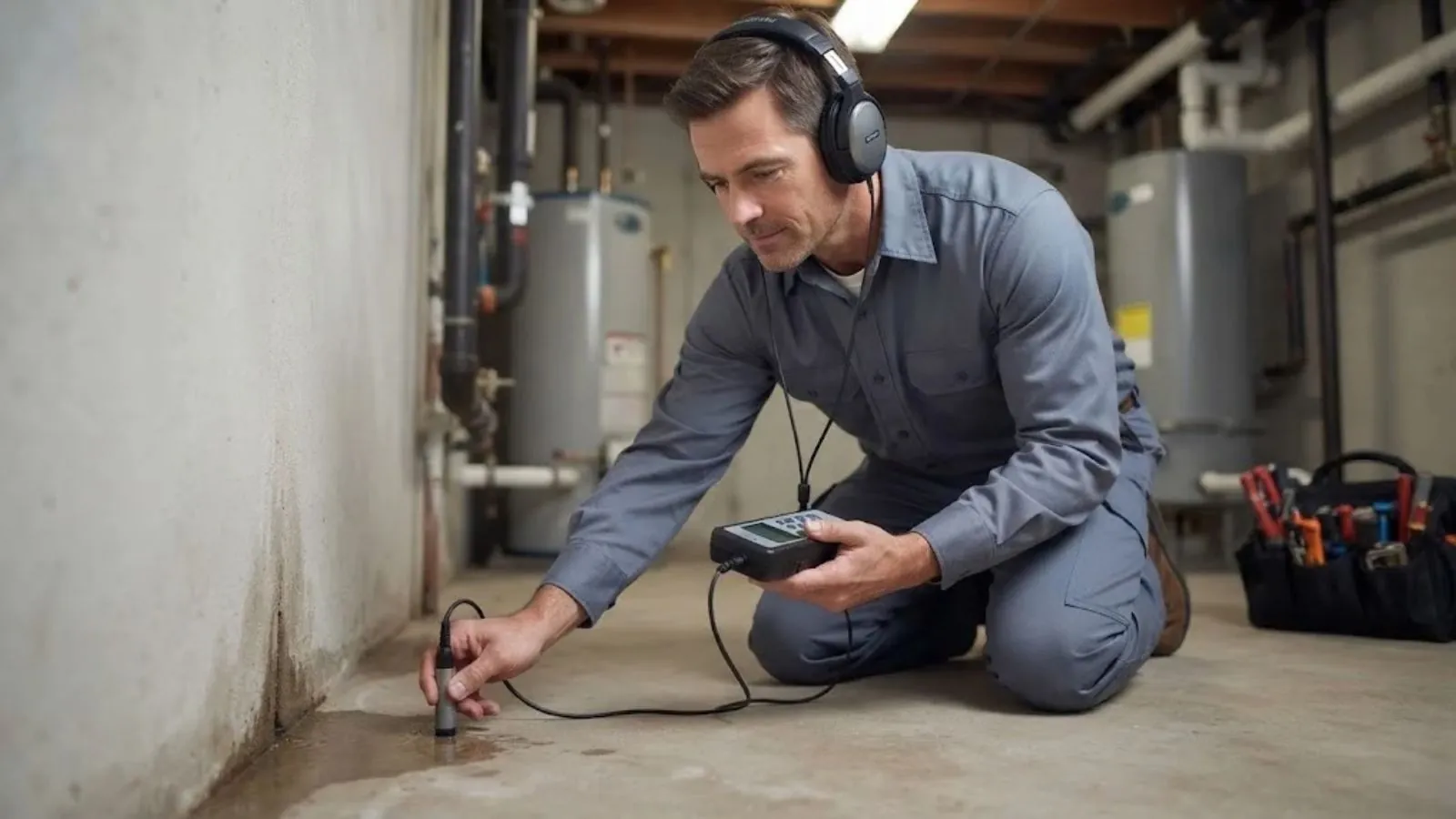
Acoustic listening devices then pick up the sound of water escaping from a pipe, and a thermal camera shows cold or warm patterns behind drywall and under floors. Tracer gas is reserved for stubborn cases where the first tools disagree.
The result is a marked spot and a repair plan. If the leak is easy to reach, we can often fix it on the same visit, and if it is under a slab or in a buried line we explain the repair options and the trade-offs before anyone opens a floor.
Ceiling, wall and attic leaks
.A stain on a ceiling is rarely directly under the leak, because water travels along joists and drywall before it shows. Bathrooms above living rooms, kitchen supply lines and the vent stack through a roof are the usual sources.
In a New Hampshire winter, roof leaks and ice dams can look like plumbing leaks. A moisture reading and a look at the attic tell us which one you have, so you do not pay for plumbing work on a roof problem.
Under-house, crawlspace and slab leaks
.Many Bedford homes are built on basements or crawlspaces, which makes supply leaks easier to reach than in slab-on-grade houses. A damp crawlspace corner, a musty smell or a dripping subfloor are signs worth checking.
Slab leaks are less common here, but additions, garage floors and some finished lower levels sit on concrete, and a warm spot on a floor is a classic sign. We treat them as a detection and rerouting job, since breaking a slab is the last option.
Buried lines, yards, irrigation and pools
.Water that surfaces in a yard, a patch of lawn that stays green and soggy or a drop in pressure after the meter point can mean a buried supply line has failed. Where a house sits far from the road, as many properties near Pulpit Rock Conservation Area do, a long service line gives a leak more room to hide.
Irrigation systems add valves and fittings that crack when winterization is missed, and pools and spas add their own plumbing. We handle detection for those too, and when a buried line is the culprit, water line repair and replacement is the next step.
What affects the cost of leak detection
.The price depends on how much searching the job needs.
Insurance often covers the resulting water damage when a pipe fails suddenly, but not the cost of the pipe itself or slow, long-term seepage. Ask your insurer whether detection costs are covered when a claim is open.
Tell a dispatcher what the meter or ceiling is doing and get a clear price before work starts.
Call (603) 815-9179.Related services and towns
.A found leak usually leads to one of a few repairs. Pipes that have split are handled under burst pipe repair, supply failures between the road and the house under water line replacement, and leaks in a drain line may need a camera inspection. We also respond to leak calls in Goffstown and the other towns we serve.
Common questions
.Do you handle leak emergencies at night or on weekends in Bedford?
Yes. The dispatch line is answered 24/7, and active leaks are placed ahead of routine calls. Same-day appointments are offered when a plumber is open.
Can you find a leak without cutting into the wall?
Often yes. Meter tests, acoustic listening and thermal imaging narrow the location so the access hole is small and in the right place.
How do I know whether the leak is on my side or the street side?
Close the main shutoff in the house and watch the meter. If it still moves, the leak is between the meter and the shutoff or underground. If it stops, the leak is inside.
My water bill is high but I see no water. What next?
Run the meter test above, then check toilets for a silent leak by adding dye to the tank. If the meter still moves, book detection before the damage grows.
Does homeowners insurance pay for finding a leak?
Coverage varies. Many policies pay for sudden water damage and sometimes for the access needed to find the cause, but not for the pipe repair. Ask your insurer before work starts.
Do you check well systems and irrigation lines too?
Yes. We test pressure tanks, well lines and irrigation zones, and winterization problems are a common cause of spring leaks.
Standards and references
.Plumbing work follows published model codes such as the International Plumbing Code (IPC) from the International Code Council and the Uniform Plumbing Code (UPC) from IAPMO. The edition a town enforces is its own decision, so ask the Bedford building department which one applies to your project.